The idea
Students are often told to think critically and to disagree civilly, but rarely taught how to do either, and almost never taught the two as one skill. ICDC treats them as inseparable. A student who can lay out the structure of an argument can see where a disagreement actually lies, and a student who has practiced talking with someone who disagrees learns to test her own reasoning against a live interlocutor rather than a straw man.
The national ICDC study, led by North Carolina State University and the University of Notre Dame with funding from the U.S. Department of Education, is testing this model on campuses across the country. ICDC-NC brings the same course to every UNC System campus at once, so that North Carolina's public universities become the first state system to try it together.
What ICDC-NC does
- Places one or more faculty fellows on each of the 17 UNC System campuses, each teaching an existing course enhanced with the ICDC materials or a new course built around them.
- Provides the fellows with a shared course template, orientation, and a common set of tools, so that a student at Elizabeth City State and a student at Appalachian State do the same work.
- Measures what students learn with the same instrument before and after the course, on every campus, so that results can be compared across the System.
- Feeds those results back to the Common Ground Collaborative and to the national ICDC study.
The course
Fellows fold three components into their courses. Each is short enough to fit inside an existing syllabus in any discipline.
Thinker
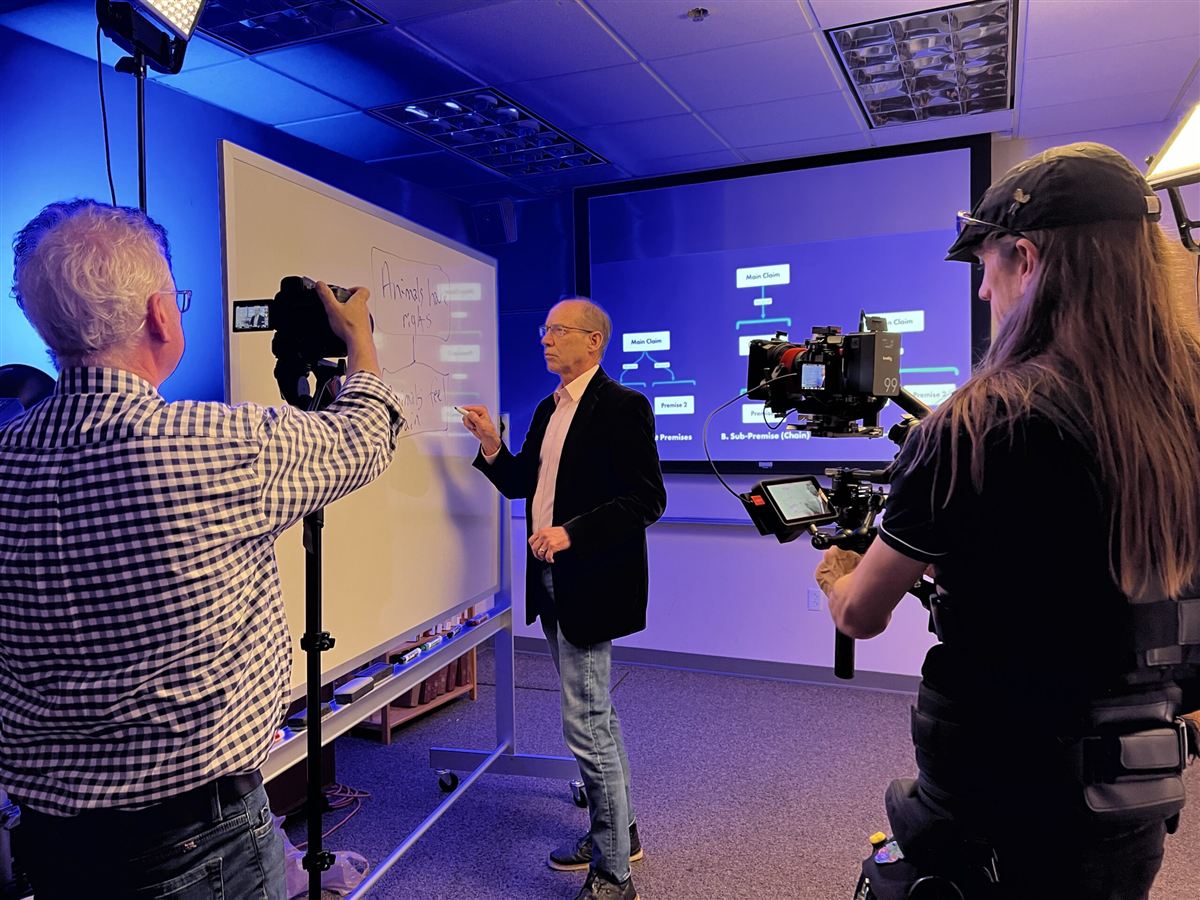
Eight online lessons in argument analysis. Students learn to identify claims and reasons, map how they connect, and evaluate whether the reasons support the claim, practicing until they reach mastery.
Sway
Six structured one-on-one conversations with a classmate who holds a different view on a contested question, conducted through a chat platform that guides both students toward understanding before persuasion.
CRIT
A validated test of critical thinking about argumentative essays, given at the start and end of the term to measure what changed.
Fellows keep their own subject matter. The ICDC materials sit alongside a history course, a psychology course, a logic course, or a seminar on arts entrepreneurship, and students practice reasoning and dialogue on the questions that course already raises.
Participating campuses
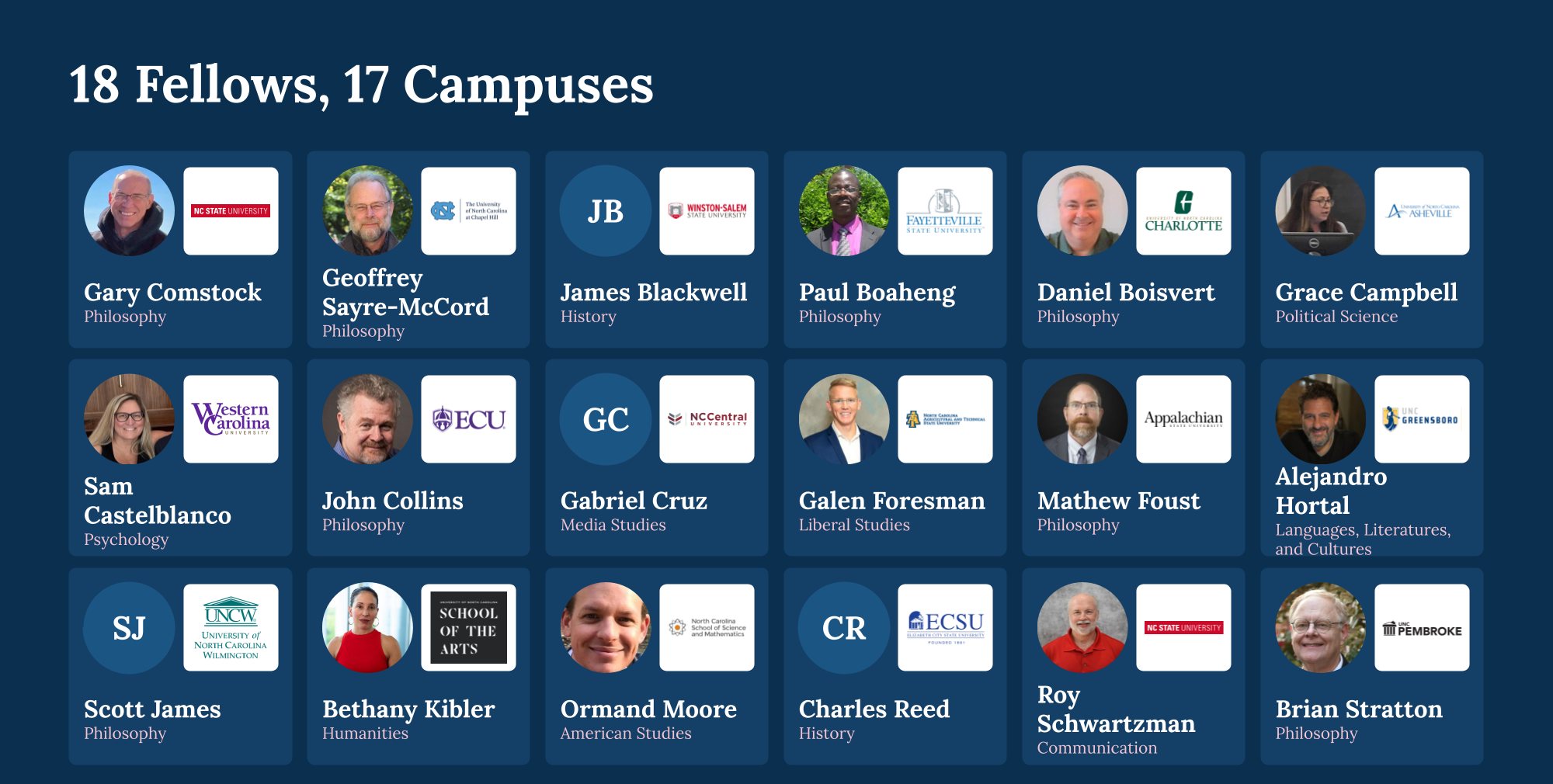
Faculty fellows on all 17 constituent institutions of the University of North Carolina System are teaching the ICDC course in the 2026 to 2027 academic year. See the fellows and their courses.
Who runs it
Gary Comstock, North Carolina State University, Director
Geoffrey Sayre-McCord, University of North Carolina at Chapel Hill, Co-director
Questions about ICDC-NC go to info@icdcusa.com. Questions about Common Ground Collaborative funding go to the System Office at commongroundcollaborative@northcarolina.edu.
For UNC System faculty
ICDC-NC fellows receive the course template, the Thinker and Sway platforms, the CRIT instrument, and a Canvas shell ready to import, along with orientation and support through the year. Faculty on any UNC System campus who would like to teach the course in a future term can write to info@icdcusa.com.
Faculty anywhere in the country can apply to the national ICDC Faculty Fellowship, which includes a four-day workshop at UNC-Chapel Hill in June 2027.
 About the national initiative